| # | Titolo | Artista | Valutazione | Durata |
|---|
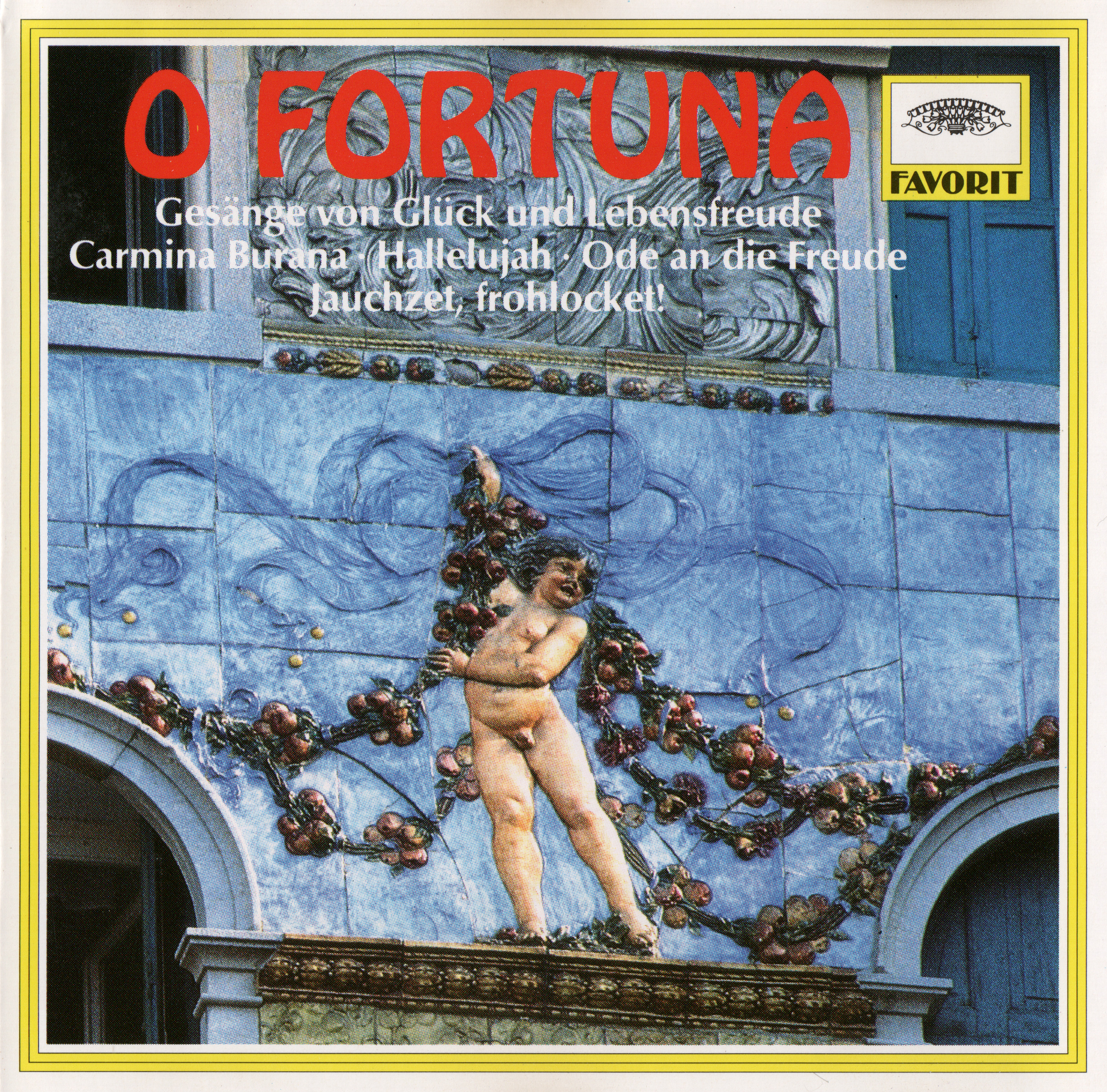
| 1 | Carmina Burana: O Fortuna | Ludwig van Beethoven | | 2:35 |
| 2 | Carmina Burana: Fortune plango vulnera | Ludwig van Beethoven | | 2:38 |
| 3 | Carmina Burana: Floret silva | Ludwig van Beethoven | | 3:05 |
| 4 | Carmina Burana: Estuans interius | Ludwig van Beethoven | | 2:15 |
| 5 | Carmina Burana: Veni, veni, venias | Ludwig van Beethoven | | 1:02 |
| 6 | Carmina Burana: Ave formosissima | Ludwig van Beethoven | | 1:40 |
| 7 | Carmina Burana: O Fortuna | Ludwig van Beethoven | | 2:31 |
| 8 | Weihnachtsoratorium BWV 248: Jauchzet, frohlocket!- tecnico di registrazione:
- Hans‐Peter Schweigmann
- produttore:
- Hans Weber
- produttore esecutivo:
- Dr Gerd Ploebsch e Prof. Dr. Hans Hickmann
- contrabbasso :
- Herbert Duft (dal 1965-02 al 1965-06) e Ludwig Kiblböck (dal 1965-02 al 1965-06)
- corno [corno da caccia I] :
- Kurt Richter (dal 1965-02 al 1965-06)
- corno [corno da caccia II] :
- Willy Beck (dal 1965-02 al 1965-06)
- fagotto :
- Karl Kolbinger (dal 1965-02 al 1965-06) e Detlev Kühl (dal 1965-02 al 1965-06)
- flauto a imboccatura laterale :
- Paul Meisen (dal 1965-02 al 1965-06)
- oboe [oboe I] , oboe d'amore [oboe d'amore I] e oboe da caccia [oboe da caccia I] :
- Edgar Shann (dal 1965-02 al 1965-06)
- oboe [oboe II] e oboe d'amore [oboe d'amore II] :
- Kurt Hausmann (dal 1965-02 al 1965-06)
- oboe da caccia [oboe da caccia II] :
- Gustav Meyer (dal 1965-02 al 1965-06)
- organo :
- Hedwig Bilgram (dal 1965-02 al 1965-06)
- tromba [trumpet I] :
- Maurice André (dal 1965-02 al 1965-06)
- tromba [trumpet II] :
- Bernhard Gediga (dal 1965-02 al 1965-06)
- tromba [trumpet III] :
- Wilhelm Oppermann (dal 1965-02 al 1965-06)
- violino :
- Otto Büchner (dal 1965-02 al 1965-06)
- violoncello :
- Kurt Engert (dal 1965-02 al 1965-06) e Oswald Uhl (dal 1965-02 al 1965-06)
- cori:
- Münchener Bach‐Chor (dal 1965-02 al 1965-06)
- orchestra:
- Münchener Bach‐Orchester (dal 1965-02 al 1965-06)
- direttore d'orchestra:
- Karl Richter (dal 1965-02 al 1965-06)
- tecnico di bilanciamento:
- Hans‐Peter Schweigmann (dal 1965-02 al 1965-06)
- diritti fonografici (℗) detenuti da:
- Polydor International GmbH (nel 1965)
- registrata presso:
- Herkulessaal in München , Bayern , Germania (dal 1965-02 al 1965-06)
- registrazione di:
- Weihnachts‐Oratorium, BWV 248: Teil I, I. Coro „Jauchzet, frohlocket“ (dal 1965-02 al 1965-06)
- eseguita per la prima volta a:
- Leipzig, Sachsen , Germania (il 1734-12-25)
- ha composto a:
- Leipzig, Sachsen , Germania (dal 1734 al 1735)
- compositore:
- Johann Sebastian Bach
- si basa su:
- Kantate, BWV 214 "Tönet, ihr Pauken! Erschallet, Trompeten!": I. Coro "Tönet, ihr Pauken! Erschallet, Trompeten!"
- parte di:
- Weihnachts-Oratorium, BWV 248
| Johann Sebastian Bach | | 8:21 |
| 9 | Der Messias: Halleluja | Georg Friedrich Händel | | 4:16 |
| 10 | Kantate BWV 51: Jauchzet Gott in allen Landen (Arie)- tecnico di registrazione:
- Klaus Scheibe
- produttore:
- Dr. Gerd Ploebsch
- contrabbasso :
- Herbert Duft (nel 1971-12, nel 1972-01)
- fagotto :
- Karl Kolbinger (nel 1971-12, nel 1972-01)
- organo :
- Hedwig Bilgram (nel 1971-12, nel 1972-01)
- tromba :
- Pierre Thibaud (nel 1971-12, nel 1972-01)
- violino :
- Kurt Guntner (nel 1971-12, nel 1972-01) e Christa Zecherle (nel 1971-12, nel 1972-01)
- violoncello :
- Johannes Fink (nel 1971-12, nel 1972-01)
- voce di soprano:
- Edith Mathis (nel 1971-12, nel 1972-01)
- orchestra:
- Münchener Bach‐Orchester (nel 1971-12, nel 1972-01)
- direttore d'orchestra:
- Karl Richter (nel 1971-12, nel 1972-01)
- diritti fonografici (℗) detenuti da:
- Polydor International GmbH (nel 1972)
- registrata presso:
- Herkulessaal in München , Bayern , Germania (nel 1971-12, nel 1972-01)
- registrazione di:
- Kantate, BWV 51 "Jauchzet Gott in allen Landen": I. Aria "Jauchzet Gott in allen Landen" (nel 1971-12)
- compositore:
- Johann Sebastian Bach (nel 1730)
- parte di:
- Kantate, BWV 51 "Jauchzet Gott in allen Landen"
| Johann Sebastian Bach | | 4:39 |
| 11 | Fidelio: Wer ein holdes Weib errungen (Finale)- cori:
- Chor der Staatsoper Dresden e Rundfunkchor Leipzig
- voce di soprano:
- Gwyneth Jones
- voce di tenore:
- James King
- orchestra:
- Staatskapelle Dresden
- direttore d'orchestra:
- Karl Böhm
- diritti fonografici (℗) detenuti da:
- Polydor International GmbH (nel 1969)
- edit di:
- Fidelio: Second Act No. 16 di Staatskapelle Dresden , Karl Böhm
- registrazione di:
- Fidelio, op. 72: Act II, Scene II, no. 16f. "Wer ein holdes Weib errungen" (Don Fernando, Florestan, Leonore, Marzelline, Rocco, Jaquino)
- compositore:
- Ludwig van Beethoven (nel 1814)
- librettista:
- Jean-Nicolas Bouilly
- librettista aggiunto:
- Georg Friedrich Treitschke
- traduttore:
- Joseph Sonnleithner
- parte di:
- Fidelio, op. 72: Act II, Scene II, no. 16. Finale "Heil sei dem Tag" (Chor, Don Fernando, Rocco, Pizarro, Florestan, Leonore, Marzelline, Jaquino)
| Ludwig van Beethoven | | 3:58 |
| 12 | Der Freischütz: Was gleicht wohl auf Erden (Jägerchor) | Carl Maria von Weber | | 2:38 |
| 13 | Tannhäuser: Freudig begrüßen wir die edle Halle | Richard Wagner | | 6:19 |
| 14 | Aida: Gloria all’ Egitto (Chor und Triumphmarsch) | Giuseppe Verdi | | 7:17 |
| 15 | Symphonie Nr. 9 d-Moll op. 125: Freude schöner Götterfunken (Chorfinale) | Ludwig van Beethoven | | 12:54 |

 Riproduci su ListenBrainz