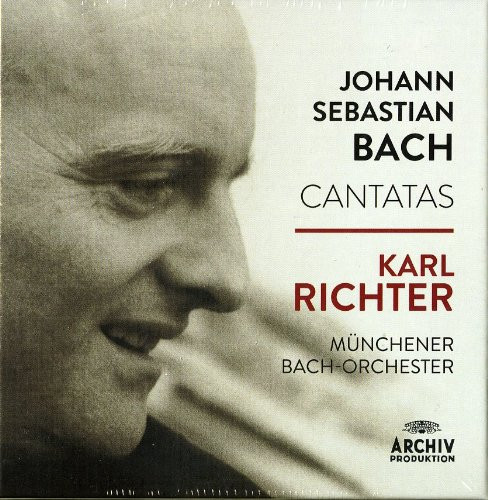
Cantatas

~ Release by Johann Sebastian Bach; Karl Richter, Münchener Bach‐Orchester (see all versions of this release, 1 available)

Tracklist

1CD: Advent un Weihnachten
2CD: Advent un Weihnachten
3CD: Advent un Weihnachten
4CD: Advent un Weihnachten
#TitleArtistRatingLength
1Cantata BWV 111 "Was mein Gott will, das g'scheh allzeit": I. Chorus: Was mein Gott will, das gscheh allzeit
sound engineer:
Hans‐Peter Schweigmann (engineer)
producer:
Hansjoachim Reiser (engineer/producer)
bassoon [Fagott]:
Detlef Kühl (bassoonist) (from 1972-03 until 1972-04) and Karl Kolbinger (bassoonist) (from 1972-03 until 1972-04)
cello [Violoncello]:
Johannes Fink (cellist and viola da gamba player) (from 1972-03 until 1972-04) and Fritz Kiskalt (cellist) (from 1972-03 until 1972-04)
double bass [Kontrabaß]:
Herbert Duft (double bass player) (from 1972-03 until 1972-04)
oboe [Oboe I]:
Manfred Clement (oboist) (from 1972-03 until 1972-04)
oboe [Oboe II]:
Kurt Hausmann (oboist) (from 1972-03 until 1972-04)
organ [Orgel]:
Hedwig Bilgram (harpsichordist and organist) (from 1972-03 until 1972-04) and Elmar Schloter (organist) (from 1972-03 until 1972-04)
choir vocals:
Münchener Bach‐Chor (Munich Bach Choir) (from 1972-03 until 1972-04)
orchestra:
Münchener Bach‐Orchester (Munich Bach Orchestra) (from 1972-03 until 1972-04)
conductor:
Karl Richter (conductor/ choir master/ organist/ harpsichordist) (from 1972-03 until 1972-04)
phonographic copyright (℗) by:
Deutsche Grammophon GmbH (this is the company; for release labels, use “Deutsche Grammophon”) (in 1972) and Polydor International GmbH (not for release label use!) (in 1972)
recorded at:
Herkulessaal in München (Munich), Bayern (Bavaria), Germany (from 1972-03 until 1972-04)
recording of:
Kantate, BWV 111 "Was mein Gott will, das gscheh allzeit": I. Coro "Was mein Gott will, das gscheh allzeit" (from 1972-03 until 1972-04)
composer:
Johann Sebastian Bach (German Baroque period composer & musician) (in 1725)
part of:
Kantate, BWV 111 "Was mein Gott will, das gscheh allzeit"
Johann Sebastian Bach5:06
2Cantata BWV 111 "Was mein Gott will, das g'scheh allzeit": II. Aria (Bass): Entsetze dich, mein Herze, nicht
sound engineer:
Hans‐Peter Schweigmann (engineer)
producer:
Hansjoachim Reiser (engineer/producer)
bassoon [Fagott]:
Detlef Kühl (bassoonist) (from 1972-03 until 1972-04) and Karl Kolbinger (bassoonist) (from 1972-03 until 1972-04)
cello [Violoncello]:
Johannes Fink (cellist and viola da gamba player) (from 1972-03 until 1972-04) and Fritz Kiskalt (cellist) (from 1972-03 until 1972-04)
double bass [Kontrabaß]:
Herbert Duft (double bass player) (from 1972-03 until 1972-04)
oboe [Oboe I]:
Manfred Clement (oboist) (from 1972-03 until 1972-04)
oboe [Oboe II]:
Kurt Hausmann (oboist) (from 1972-03 until 1972-04)
organ [Orgel]:
Hedwig Bilgram (harpsichordist and organist) (from 1972-03 until 1972-04) and Elmar Schloter (organist) (from 1972-03 until 1972-04)
bass vocals:
Dietrich Fischer‐Dieskau (baritone) (from 1972-03 until 1972-04)
orchestra:
Münchener Bach‐Orchester (Munich Bach Orchestra) (from 1972-03 until 1972-04)
conductor:
Karl Richter (conductor/ choir master/ organist/ harpsichordist) (from 1972-03 until 1972-04)
phonographic copyright (℗) by:
Deutsche Grammophon GmbH (this is the company; for release labels, use “Deutsche Grammophon”) (in 1972) and Polydor International GmbH (not for release label use!) (in 1972)
recorded at:
Herkulessaal in München (Munich), Bayern (Bavaria), Germany (from 1972-03 until 1972-04)
recording of:
Kantate, BWV 111 "Was mein Gott will, das gscheh allzeit": II. Aria (Bass) "Entsetze dich, mein Herze, nicht" (from 1972-03 until 1972-04)
composer:
Johann Sebastian Bach (German Baroque period composer & musician) (in 1725)
part of:
Kantate, BWV 111 "Was mein Gott will, das gscheh allzeit"
Johann Sebastian Bach3:50
3Cantata BWV 111 "Was mein Gott will, das g'scheh allzeit": III. Recitative (Alto): O Törichter! der sich von Gott entzieht
sound engineer:
Hans‐Peter Schweigmann (engineer)
producer:
Hansjoachim Reiser (engineer/producer)
bassoon [Fagott]:
Detlef Kühl (bassoonist) (from 1972-03 until 1972-04) and Karl Kolbinger (bassoonist) (from 1972-03 until 1972-04)
cello [Violoncello]:
Johannes Fink (cellist and viola da gamba player) (from 1972-03 until 1972-04) and Fritz Kiskalt (cellist) (from 1972-03 until 1972-04)
double bass [Kontrabaß]:
Herbert Duft (double bass player) (from 1972-03 until 1972-04)
oboe [Oboe I]:
Manfred Clement (oboist) (from 1972-03 until 1972-04)
oboe [Oboe II]:
Kurt Hausmann (oboist) (from 1972-03 until 1972-04)
organ [Orgel]:
Hedwig Bilgram (harpsichordist and organist) (from 1972-03 until 1972-04) and Elmar Schloter (organist) (from 1972-03 until 1972-04)
alto vocals:
Anna Reynolds (alto) (from 1972-03 until 1972-04)
orchestra:
Münchener Bach‐Orchester (Munich Bach Orchestra) (from 1972-03 until 1972-04)
conductor:
Karl Richter (conductor/ choir master/ organist/ harpsichordist) (from 1972-03 until 1972-04)
phonographic copyright (℗) by:
Deutsche Grammophon GmbH (this is the company; for release labels, use “Deutsche Grammophon”) (in 1972) and Polydor International GmbH (not for release label use!) (in 1972)
recorded at:
Herkulessaal in München (Munich), Bayern (Bavaria), Germany (from 1972-03 until 1972-04)
recording of:
Kantate, BWV 111 "Was mein Gott will, das gscheh allzeit": III. Recitativo (Alt) "O Törichter! der sich von Gott entzieht" (from 1972-03 until 1972-04)
composer:
Johann Sebastian Bach (German Baroque period composer & musician) (in 1725)
part of:
Kantate, BWV 111 "Was mein Gott will, das gscheh allzeit"
Johann Sebastian Bach1:18
4Cantata BWV 111 "Was mein Gott will, das g'scheh allzeit": IV. Duet (Alto, Tenor): So geh ich mit beherzten Schritten
sound engineer:
Hans‐Peter Schweigmann (engineer)
producer:
Hansjoachim Reiser (engineer/producer)
bassoon [Fagott]:
Detlef Kühl (bassoonist) (from 1972-03 until 1972-04) and Karl Kolbinger (bassoonist) (from 1972-03 until 1972-04)
cello [Violoncello]:
Johannes Fink (cellist and viola da gamba player) (from 1972-03 until 1972-04) and Fritz Kiskalt (cellist) (from 1972-03 until 1972-04)
double bass [Kontrabaß]:
Herbert Duft (double bass player) (from 1972-03 until 1972-04)
oboe [Oboe I]:
Manfred Clement (oboist) (from 1972-03 until 1972-04)
oboe [Oboe II]:
Kurt Hausmann (oboist) (from 1972-03 until 1972-04)
organ [Orgel]:
Hedwig Bilgram (harpsichordist and organist) (from 1972-03 until 1972-04) and Elmar Schloter (organist) (from 1972-03 until 1972-04)
alto vocals:
Anna Reynolds (alto) (from 1972-03 until 1972-04)
tenor vocals:
Peter Schreier (German tenor and conductor) (from 1972-03 until 1972-04)
orchestra:
Münchener Bach‐Orchester (Munich Bach Orchestra) (from 1972-03 until 1972-04)
conductor:
Karl Richter (conductor/ choir master/ organist/ harpsichordist) (from 1972-03 until 1972-04)
phonographic copyright (℗) by:
Deutsche Grammophon GmbH (this is the company; for release labels, use “Deutsche Grammophon”) (in 1972) and Polydor International GmbH (not for release label use!) (in 1972)
recorded at:
Herkulessaal in München (Munich), Bayern (Bavaria), Germany (from 1972-03 until 1972-04)
recording of:
Kantate, BWV 111 "Was mein Gott will, das gscheh allzeit": IV. Aria (Alt, Tenor) "So geh ich mit beherzten Schritten" (from 1972-03 until 1972-04)
composer:
Johann Sebastian Bach (German Baroque period composer & musician) (in 1725)
part of:
Kantate, BWV 111 "Was mein Gott will, das gscheh allzeit"
Johann Sebastian Bach8:28
5Cantata BWV 111 "Was mein Gott will, das g'scheh allzeit": V. Recitative (Soprano): Drum wenn der Tod zuletzt den Geist
sound engineer:
Hans‐Peter Schweigmann (engineer)
producer:
Hansjoachim Reiser (engineer/producer)
bassoon [Fagott]:
Detlef Kühl (bassoonist) (from 1972-03 until 1972-04) and Karl Kolbinger (bassoonist) (from 1972-03 until 1972-04)
cello [Violoncello]:
Johannes Fink (cellist and viola da gamba player) (from 1972-03 until 1972-04) and Fritz Kiskalt (cellist) (from 1972-03 until 1972-04)
double bass [Kontrabaß]:
Herbert Duft (double bass player) (from 1972-03 until 1972-04)
oboe [Oboe I]:
Manfred Clement (oboist) (from 1972-03 until 1972-04)
oboe [Oboe II]:
Kurt Hausmann (oboist) (from 1972-03 until 1972-04)
organ [Orgel]:
Hedwig Bilgram (harpsichordist and organist) (from 1972-03 until 1972-04) and Elmar Schloter (organist) (from 1972-03 until 1972-04)
soprano vocals:
Edith Mathis (soprano) (from 1972-03 until 1972-04)
orchestra:
Münchener Bach‐Orchester (Munich Bach Orchestra) (from 1972-03 until 1972-04)
conductor:
Karl Richter (conductor/ choir master/ organist/ harpsichordist) (from 1972-03 until 1972-04)
phonographic copyright (℗) by:
Deutsche Grammophon GmbH (this is the company; for release labels, use “Deutsche Grammophon”) (in 1972) and Polydor International GmbH (not for release label use!) (in 1972)
recorded at:
Herkulessaal in München (Munich), Bayern (Bavaria), Germany (from 1972-03 until 1972-04)
recording of:
Kantate, BWV 111 "Was mein Gott will, das gscheh allzeit": V. Recitativo (Sopran) "Drum wenn der Tod zuletzt den Geist" (from 1972-03 until 1972-04)
composer:
Johann Sebastian Bach (German Baroque period composer & musician) (in 1725)
part of:
Kantate, BWV 111 "Was mein Gott will, das gscheh allzeit"
Johann Sebastian Bach1:21
6Cantata BWV 111 "Was mein Gott will, das g'scheh allzeit": VI. Chorale: Noch eins, Herr, will ich bitten dich
sound engineer:
Hans‐Peter Schweigmann (engineer)
producer:
Hansjoachim Reiser (engineer/producer)
bassoon [Fagott]:
Detlef Kühl (bassoonist) (from 1972-03 until 1972-04) and Karl Kolbinger (bassoonist) (from 1972-03 until 1972-04)
cello [Violoncello]:
Johannes Fink (cellist and viola da gamba player) (from 1972-03 until 1972-04) and Fritz Kiskalt (cellist) (from 1972-03 until 1972-04)
double bass [Kontrabaß]:
Herbert Duft (double bass player) (from 1972-03 until 1972-04)
oboe [Oboe I]:
Manfred Clement (oboist) (from 1972-03 until 1972-04)
oboe [Oboe II]:
Kurt Hausmann (oboist) (from 1972-03 until 1972-04)
organ [Orgel]:
Hedwig Bilgram (harpsichordist and organist) (from 1972-03 until 1972-04) and Elmar Schloter (organist) (from 1972-03 until 1972-04)
choir vocals:
Münchener Bach‐Chor (Munich Bach Choir) (from 1972-03 until 1972-04)
orchestra:
Münchener Bach‐Orchester (Munich Bach Orchestra) (from 1972-03 until 1972-04)
conductor:
Karl Richter (conductor/ choir master/ organist/ harpsichordist) (from 1972-03 until 1972-04)
phonographic copyright (℗) by:
Deutsche Grammophon GmbH (this is the company; for release labels, use “Deutsche Grammophon”) (in 1972) and Polydor International GmbH (not for release label use!) (in 1972)
recorded at:
Herkulessaal in München (Munich), Bayern (Bavaria), Germany (from 1972-03 until 1972-04)
recording of:
Kantate, BWV 111 "Was mein Gott will, das gscheh allzeit": VI. Choral "Noch eins, Herr, will ich bitten dich" (from 1972-03 until 1972-04)
composer:
Johann Sebastian Bach (German Baroque period composer & musician) (in 1725)
part of:
Breitkopf 389 Choralgesänge (number: 345)
part of:
Kantate, BWV 111 "Was mein Gott will, das gscheh allzeit"
Johann Sebastian Bach1:45
7Cantata BWV 81 "Jesus schläft, was soll ich hoffen": I. Aria (Alto): Jesus schläft, was soll ich hoffen?
sound engineer:
Hans‐Peter Schweigmann (engineer)
producer:
Hansjoachim Reiser (engineer/producer)
bassoon [Fagott]:
Detlef Kühl (bassoonist) (from 1972-03 until 1972-04) and Karl Kolbinger (bassoonist) (from 1972-03 until 1972-04)
cello [Violoncello]:
Johannes Fink (cellist and viola da gamba player) (from 1972-03 until 1972-04) and Fritz Kiskalt (cellist) (from 1972-03 until 1972-04)
double bass [Kontrabaß]:
Herbert Duft (double bass player) (from 1972-03 until 1972-04)
oboe d'amore [Oboe d'amore I]:
Manfred Clement (oboist) (from 1972-03 until 1972-04)
oboe d'amore [Oboe d'amore II]:
Kurt Hausmann (oboist) (from 1972-03 until 1972-04)
organ [Orgel]:
Hedwig Bilgram (harpsichordist and organist) (from 1972-03 until 1972-04) and Elmar Schloter (organist) (from 1972-03 until 1972-04)
recorder [Blockflöte I]:
Hans-Martin Linde (flutist and conductor) (from 1972-03 until 1972-04)
recorder [Blockflöte II]:
Günther Höller (recorder player) (from 1972-03 until 1972-04)
alto vocals:
Anna Reynolds (alto) (from 1972-03 until 1972-04)
orchestra:
Münchener Bach‐Orchester (Munich Bach Orchestra) (from 1972-03 until 1972-04)
conductor:
Karl Richter (conductor/ choir master/ organist/ harpsichordist) (from 1972-03 until 1972-04)
phonographic copyright (℗) by:
Deutsche Grammophon GmbH (this is the company; for release labels, use “Deutsche Grammophon”) (in 1972) and Polydor International GmbH (not for release label use!) (in 1972)
recorded at:
Herkulessaal in München (Munich), Bayern (Bavaria), Germany (from 1972-03 until 1972-04)
recording of:
Kantate, BWV 81 "Jesus schläft, was soll ich hoffen": I. Aria (Alt) "Jesus schläft, was soll ich hoffen?" (from 1972-03 until 1972-04)
composer:
Johann Sebastian Bach (German Baroque period composer & musician) (in 1724)
part of:
Kantate, BWV 81 "Jesus schläft, was soll ich hoffen"
Johann Sebastian Bach5:34
8Cantata BWV 81 "Jesus schläft, was soll ich hoffen": II. Recitative (Tenor): Herr! warum trittest du so ferne?
sound engineer:
Hans‐Peter Schweigmann (engineer)
producer:
Hansjoachim Reiser (engineer/producer)
bassoon [Fagott]:
Detlef Kühl (bassoonist) (from 1972-03 until 1972-04) and Karl Kolbinger (bassoonist) (from 1972-03 until 1972-04)
cello [Violoncello]:
Johannes Fink (cellist and viola da gamba player) (from 1972-03 until 1972-04) and Fritz Kiskalt (cellist) (from 1972-03 until 1972-04)
double bass [Kontrabaß]:
Herbert Duft (double bass player) (from 1972-03 until 1972-04)
oboe d'amore [Oboe d'amore I]:
Manfred Clement (oboist) (from 1972-03 until 1972-04)
oboe d'amore [Oboe d'amore II]:
Kurt Hausmann (oboist) (from 1972-03 until 1972-04)
organ [Orgel]:
Hedwig Bilgram (harpsichordist and organist) (from 1972-03 until 1972-04) and Elmar Schloter (organist) (from 1972-03 until 1972-04)
recorder [Blockflöte I]:
Hans-Martin Linde (flutist and conductor) (from 1972-03 until 1972-04)
recorder [Blockflöte II]:
Günther Höller (recorder player) (from 1972-03 until 1972-04)
bass vocals:
Dietrich Fischer‐Dieskau (baritone) (from 1972-03 until 1972-04)
tenor vocals:
Peter Schreier (German tenor and conductor) (from 1972-03 until 1972-04)
orchestra:
Münchener Bach‐Orchester (Munich Bach Orchestra) (from 1972-03 until 1972-04)
conductor:
Karl Richter (conductor/ choir master/ organist/ harpsichordist) (from 1972-03 until 1972-04)
phonographic copyright (℗) by:
Deutsche Grammophon GmbH (this is the company; for release labels, use “Deutsche Grammophon”) (in 1972) and Polydor International GmbH (not for release label use!) (in 1972)
recorded at:
Herkulessaal in München (Munich), Bayern (Bavaria), Germany (from 1972-03 until 1972-04)
recording of:
Kantate, BWV 81 "Jesus schläft, was soll ich hoffen": II. Recitativo (Tenor) "Herr, warum trittest du so ferne?" (from 1972-03 until 1972-04)
composer:
Johann Sebastian Bach (German Baroque period composer & musician) (in 1724)
part of:
Kantate, BWV 81 "Jesus schläft, was soll ich hoffen"
Johann Sebastian Bach1:26
9Cantata BWV 81 "Jesus schläft, was soll ich hoffen": III. Aria (Tenor): Die schäumenden Wellen von Belials Bächen
sound engineer:
Hans‐Peter Schweigmann (engineer)
producer:
Hansjoachim Reiser (engineer/producer)
bassoon [Fagott]:
Detlef Kühl (bassoonist) (from 1972-03 until 1972-04) and Karl Kolbinger (bassoonist) (from 1972-03 until 1972-04)
cello [Violoncello]:
Johannes Fink (cellist and viola da gamba player) (from 1972-03 until 1972-04) and Fritz Kiskalt (cellist) (from 1972-03 until 1972-04)
double bass [Kontrabaß]:
Herbert Duft (double bass player) (from 1972-03 until 1972-04)
oboe d'amore [Oboe d'amore I]:
Manfred Clement (oboist) (from 1972-03 until 1972-04)
oboe d'amore [Oboe d'amore II]:
Kurt Hausmann (oboist) (from 1972-03 until 1972-04)
organ [Orgel]:
Hedwig Bilgram (harpsichordist and organist) (from 1972-03 until 1972-04) and Elmar Schloter (organist) (from 1972-03 until 1972-04)
recorder [Blockflöte I]:
Hans-Martin Linde (flutist and conductor) (from 1972-03 until 1972-04)
recorder [Blockflöte II]:
Günther Höller (recorder player) (from 1972-03 until 1972-04)
tenor vocals:
Peter Schreier (German tenor and conductor) (from 1972-03 until 1972-04)
orchestra:
Münchener Bach‐Orchester (Munich Bach Orchestra) (from 1972-03 until 1972-04)
conductor:
Karl Richter (conductor/ choir master/ organist/ harpsichordist) (from 1972-03 until 1972-04)
phonographic copyright (℗) by:
Deutsche Grammophon GmbH (this is the company; for release labels, use “Deutsche Grammophon”) (in 1972) and Polydor International GmbH (not for release label use!) (in 1972)
recorded at:
Herkulessaal in München (Munich), Bayern (Bavaria), Germany (from 1972-03 until 1972-04)
recording of:
Kantate, BWV 81 "Jesus schläft, was soll ich hoffen": III. Aria (Tenor) "Die schäumenden Wellen von Belials Bächen" (from 1972-03 until 1972-04)
composer:
Johann Sebastian Bach (German Baroque period composer & musician) (in 1724)
part of:
Kantate, BWV 81 "Jesus schläft, was soll ich hoffen"
Johann Sebastian Bach3:15
10Cantata BWV 81 "Jesus schläft, was soll ich hoffen": IV. Arioso (Bass): Ihr Kleingläubigen, warum seid ihr so furchtsam?
sound engineer:
Hans‐Peter Schweigmann (engineer)
producer:
Hansjoachim Reiser (engineer/producer)
bassoon [Fagott]:
Detlef Kühl (bassoonist) (from 1972-03 until 1972-04) and Karl Kolbinger (bassoonist) (from 1972-03 until 1972-04)
cello [Violoncello]:
Johannes Fink (cellist and viola da gamba player) (from 1972-03 until 1972-04) and Fritz Kiskalt (cellist) (from 1972-03 until 1972-04)
double bass [Kontrabaß]:
Herbert Duft (double bass player) (from 1972-03 until 1972-04)
oboe d'amore [Oboe d'amore I]:
Manfred Clement (oboist) (from 1972-03 until 1972-04)
oboe d'amore [Oboe d'amore II]:
Kurt Hausmann (oboist) (from 1972-03 until 1972-04)
organ [Orgel]:
Hedwig Bilgram (harpsichordist and organist) (from 1972-03 until 1972-04) and Elmar Schloter (organist) (from 1972-03 until 1972-04)
recorder [Blockflöte I]:
Hans-Martin Linde (flutist and conductor) (from 1972-03 until 1972-04)
recorder [Blockflöte II]:
Günther Höller (recorder player) (from 1972-03 until 1972-04)
bass vocals:
Dietrich Fischer‐Dieskau (baritone) (from 1972-03 until 1972-04)
orchestra:
Münchener Bach‐Orchester (Munich Bach Orchestra) (from 1972-03 until 1972-04)
conductor:
Karl Richter (conductor/ choir master/ organist/ harpsichordist) (from 1972-03 until 1972-04)
phonographic copyright (℗) by:
Deutsche Grammophon GmbH (this is the company; for release labels, use “Deutsche Grammophon”) (in 1972) and Polydor International GmbH (not for release label use!) (in 1972)
recorded at:
Herkulessaal in München (Munich), Bayern (Bavaria), Germany (from 1972-03 until 1972-04)
recording of:
Kantate, BWV 81 "Jesus schläft, was soll ich hoffen": IV. Arioso (Bass) "Ihr Kleingläubigen, warum seid ihr so furchtsam?" (from 1972-03 until 1972-04)
composer:
Johann Sebastian Bach (German Baroque period composer & musician) (in 1724)
part of:
Kantate, BWV 81 "Jesus schläft, was soll ich hoffen"
Johann Sebastian Bach1:32
11Cantata BWV 81 "Jesus schläft, was soll ich hoffen": V. Aria (Bass): Schweig, aufgetürmtes Meer!
sound engineer:
Hans‐Peter Schweigmann (engineer)
producer:
Hansjoachim Reiser (engineer/producer)
bassoon [Fagott]:
Detlef Kühl (bassoonist) (from 1972-03 until 1972-04) and Karl Kolbinger (bassoonist) (from 1972-03 until 1972-04)
cello [Violoncello]:
Johannes Fink (cellist and viola da gamba player) (from 1972-03 until 1972-04) and Fritz Kiskalt (cellist) (from 1972-03 until 1972-04)
double bass [Kontrabaß]:
Herbert Duft (double bass player) (from 1972-03 until 1972-04)
oboe d'amore [Oboe d'amore I]:
Manfred Clement (oboist) (from 1972-03 until 1972-04)
oboe d'amore [Oboe d'amore II]:
Kurt Hausmann (oboist) (from 1972-03 until 1972-04)
organ [Orgel]:
Hedwig Bilgram (harpsichordist and organist) (from 1972-03 until 1972-04) and Elmar Schloter (organist) (from 1972-03 until 1972-04)
recorder [Blockflöte I]:
Hans-Martin Linde (flutist and conductor) (from 1972-03 until 1972-04)
recorder [Blockflöte II]:
Günther Höller (recorder player) (from 1972-03 until 1972-04)
bass vocals:
Dietrich Fischer‐Dieskau (baritone) (from 1972-03 until 1972-04)
orchestra:
Münchener Bach‐Orchester (Munich Bach Orchestra) (from 1972-03 until 1972-04)
conductor:
Karl Richter (conductor/ choir master/ organist/ harpsichordist) (from 1972-03 until 1972-04)
phonographic copyright (℗) by:
Deutsche Grammophon GmbH (this is the company; for release labels, use “Deutsche Grammophon”) (in 1972) and Polydor International GmbH (not for release label use!) (in 1972)
recorded at:
Herkulessaal in München (Munich), Bayern (Bavaria), Germany (from 1972-03 until 1972-04)
recording of:
Kantate, BWV 81 "Jesus schläft, was soll ich hoffen": V. Aria (Bass) "Schweig, aufgetürmtes Meer!" (from 1972-03 until 1972-04)
composer:
Johann Sebastian Bach (German Baroque period composer & musician) (in 1724)
part of:
Kantate, BWV 81 "Jesus schläft, was soll ich hoffen"
Johann Sebastian Bach5:38
12Cantata BWV 81 "Jesus schläft, was soll ich hoffen": VI. Recitative (Alto): Wohl mir, mein Jesus spricht ein Wort
sound engineer:
Hans‐Peter Schweigmann (engineer)
producer:
Hansjoachim Reiser (engineer/producer)
bassoon [Fagott]:
Detlef Kühl (bassoonist) (from 1972-03 until 1972-04) and Karl Kolbinger (bassoonist) (from 1972-03 until 1972-04)
cello [Violoncello]:
Johannes Fink (cellist and viola da gamba player) (from 1972-03 until 1972-04) and Fritz Kiskalt (cellist) (from 1972-03 until 1972-04)
double bass [Kontrabaß]:
Herbert Duft (double bass player) (from 1972-03 until 1972-04)
oboe d'amore [Oboe d'amore I]:
Manfred Clement (oboist) (from 1972-03 until 1972-04)
oboe d'amore [Oboe d'amore II]:
Kurt Hausmann (oboist) (from 1972-03 until 1972-04)
organ [Orgel]:
Hedwig Bilgram (harpsichordist and organist) (from 1972-03 until 1972-04) and Elmar Schloter (organist) (from 1972-03 until 1972-04)
recorder [Blockflöte I]:
Hans-Martin Linde (flutist and conductor) (from 1972-03 until 1972-04)
recorder [Blockflöte II]:
Günther Höller (recorder player) (from 1972-03 until 1972-04)
alto vocals:
Anna Reynolds (alto) (from 1972-03 until 1972-04)
orchestra:
Münchener Bach‐Orchester (Munich Bach Orchestra) (from 1972-03 until 1972-04)
conductor:
Karl Richter (conductor/ choir master/ organist/ harpsichordist) (from 1972-03 until 1972-04)
phonographic copyright (℗) by:
Deutsche Grammophon GmbH (this is the company; for release labels, use “Deutsche Grammophon”) (in 1972) and Polydor International GmbH (not for release label use!) (in 1972)
recorded at:
Herkulessaal in München (Munich), Bayern (Bavaria), Germany (from 1972-03 until 1972-04)
recording of:
Kantate, BWV 81 "Jesus schläft, was soll ich hoffen": VI. Recitativo (Alt) "Wohl mir, mein Jesus spricht ein Wort" (from 1972-03 until 1972-04)
composer:
Johann Sebastian Bach (German Baroque period composer & musician) (in 1724)
part of:
Kantate, BWV 81 "Jesus schläft, was soll ich hoffen"
Johann Sebastian Bach0:39
13Cantata BWV 81 "Jesus schläft, was soll ich hoffen": VII. Chorale: Unter deinen Schirmen
sound engineer:
Hans‐Peter Schweigmann (engineer)
producer:
Hansjoachim Reiser (engineer/producer)
bassoon [Fagott]:
Detlef Kühl (bassoonist) (from 1972-03 until 1972-04) and Karl Kolbinger (bassoonist) (from 1972-03 until 1972-04)
cello [Violoncello]:
Johannes Fink (cellist and viola da gamba player) (from 1972-03 until 1972-04) and Fritz Kiskalt (cellist) (from 1972-03 until 1972-04)
double bass [Kontrabaß]:
Herbert Duft (double bass player) (from 1972-03 until 1972-04)
oboe d'amore [Oboe d'amore I]:
Manfred Clement (oboist) (from 1972-03 until 1972-04)
oboe d'amore [Oboe d'amore II]:
Kurt Hausmann (oboist) (from 1972-03 until 1972-04)
organ [Orgel]:
Hedwig Bilgram (harpsichordist and organist) (from 1972-03 until 1972-04) and Elmar Schloter (organist) (from 1972-03 until 1972-04)
recorder [Blockflöte I]:
Hans-Martin Linde (flutist and conductor) (from 1972-03 until 1972-04)
recorder [Blockflöte II]:
Günther Höller (recorder player) (from 1972-03 until 1972-04)
choir vocals:
Münchener Bach‐Chor (Munich Bach Choir) (from 1972-03 until 1972-04)
orchestra:
Münchener Bach‐Orchester (Munich Bach Orchestra) (from 1972-03 until 1972-04)
conductor:
Karl Richter (conductor/ choir master/ organist/ harpsichordist) (from 1972-03 until 1972-04)
phonographic copyright (℗) by:
Deutsche Grammophon GmbH (this is the company; for release labels, use “Deutsche Grammophon”) (in 1972) and Polydor International GmbH (not for release label use!) (in 1972)
recorded at:
Herkulessaal in München (Munich), Bayern (Bavaria), Germany (from 1972-03 until 1972-04)
recording of:
Kantate, BWV 81 "Jesus schläft, was soll ich hoffen": VII. Choral "Unter deinen Schirmen" (from 1972-03 until 1972-04)
lyricist:
Johann Franck (German poet of the 17th century)
composer:
Johann Sebastian Bach (German Baroque period composer & musician) (in 1724)
part of:
Breitkopf 389 Choralgesänge (number: 197)
part of:
Kantate, BWV 81 "Jesus schläft, was soll ich hoffen"
Johann Sebastian Bach1:26
14Cantata BWV 82 "Ich habe genug": I. Aria (Bass): Ich habe genung, ich habe den Heiland
sound engineer and balance engineer:
Harald Baudis (sound engineer)
executive producer:
Prof. Dr. Hans Hickmann
producer:
Rainer Brock (producer and recording supervisor for Deutsche Grammophon)
bassoon [Fagott]:
Detlef Kühl (bassoonist) (in 1968-07) and Karl Kolbinger (bassoonist) (in 1968-07)
cello [Violoncello]:
Johannes Fink (cellist and viola da gamba player) (in 1968-07) and Fritz Kiskalt (cellist) (in 1968-07)
double bass [Kontrabaß]:
Herbert Duft (double bass player) (in 1968-07)
oboe:
Manfred Clement (oboist) (in 1968-07)
organ [Orgel]:
Hedwig Bilgram (harpsichordist and organist) (in 1968-07) and Elmar Schloter (organist) (in 1968-07)
bass vocals:
Dietrich Fischer‐Dieskau (baritone) (in 1968-07)
orchestra:
Münchener Bach‐Orchester (Munich Bach Orchestra) (in 1968-07)
conductor:
Karl Richter (conductor/ choir master/ organist/ harpsichordist) (in 1968-07)
phonographic copyright (℗) by:
Deutsche Grammophon GmbH (this is the company; for release labels, use “Deutsche Grammophon”) (in 1970) and Polydor International GmbH (not for release label use!) (in 1970)
recorded at:
Herkulessaal in München (Munich), Bayern (Bavaria), Germany (in 1968-07)
recording of:
Kantate, BWV 82 “Ich habe genung”: I. Aria (Bass) “Ich habe genung, ich habe den Heiland” (in 1968-07)
composer:
Johann Sebastian Bach (German Baroque period composer & musician) (in 1727)
part of:
Kantate, BWV 82 “Ich habe genung” (for bass)
Johann Sebastian Bach8:10
15Cantata BWV 82 "Ich habe genug": II. Recitative (Bass): Ich habe genung! Mein Trost ist nur allein
sound engineer and balance engineer:
Harald Baudis (sound engineer)
executive producer:
Prof. Dr. Hans Hickmann
producer:
Rainer Brock (producer and recording supervisor for Deutsche Grammophon)
bassoon [Fagott]:
Detlef Kühl (bassoonist) (in 1968-07) and Karl Kolbinger (bassoonist) (in 1968-07)
cello [Violoncello]:
Johannes Fink (cellist and viola da gamba player) (in 1968-07) and Fritz Kiskalt (cellist) (in 1968-07)
double bass [Kontrabaß]:
Herbert Duft (double bass player) (in 1968-07)
oboe:
Manfred Clement (oboist) (in 1968-07)
organ [Orgel]:
Hedwig Bilgram (harpsichordist and organist) (in 1968-07) and Elmar Schloter (organist) (in 1968-07)
bass vocals:
Dietrich Fischer‐Dieskau (baritone) (in 1968-07)
orchestra:
Münchener Bach‐Orchester (Munich Bach Orchestra) (in 1968-07)
conductor:
Karl Richter (conductor/ choir master/ organist/ harpsichordist) (in 1968-07)
phonographic copyright (℗) by:
Deutsche Grammophon GmbH (this is the company; for release labels, use “Deutsche Grammophon”) (in 1970) and Polydor International GmbH (not for release label use!) (in 1970)
recorded at:
Herkulessaal in München (Munich), Bayern (Bavaria), Germany (in 1968-07)
recording of:
Kantate, BWV 82 "Ich habe genung": II. Recitativo (Bass) "Ich habe genung! Mein Trost ist nur allein" (in 1968-07)
composer:
Johann Sebastian Bach (German Baroque period composer & musician) (in 1727)
part of:
Kantate, BWV 82 “Ich habe genung” (for bass)
Johann Sebastian Bach1:42
16Cantata BWV 82 "Ich habe genug": III. Aria (Bass): Schlummert ein, ihr matten Augen
sound engineer and balance engineer:
Harald Baudis (sound engineer)
executive producer:
Prof. Dr. Hans Hickmann
producer:
Rainer Brock (producer and recording supervisor for Deutsche Grammophon)
bassoon [Fagott]:
Detlef Kühl (bassoonist) (in 1968-07) and Karl Kolbinger (bassoonist) (in 1968-07)
cello [Violoncello]:
Johannes Fink (cellist and viola da gamba player) (in 1968-07) and Fritz Kiskalt (cellist) (in 1968-07)
double bass [Kontrabaß]:
Herbert Duft (double bass player) (in 1968-07)
oboe:
Manfred Clement (oboist) (in 1968-07)
organ [Orgel]:
Hedwig Bilgram (harpsichordist and organist) (in 1968-07) and Elmar Schloter (organist) (in 1968-07)
bass vocals:
Dietrich Fischer‐Dieskau (baritone) (in 1968-07)
orchestra:
Münchener Bach‐Orchester (Munich Bach Orchestra) (in 1968-07)
conductor:
Karl Richter (conductor/ choir master/ organist/ harpsichordist) (in 1968-07)
phonographic copyright (℗) by:
Deutsche Grammophon GmbH (this is the company; for release labels, use “Deutsche Grammophon”) (in 1970) and Polydor International GmbH (not for release label use!) (in 1970)
recorded at:
Herkulessaal in München (Munich), Bayern (Bavaria), Germany (in 1968-07)
recording of:
Kantate, BWV 82 "Ich habe genung": III. Aria (Bass) "Schlummert ein, ihr matten Augen" (in 1968-07)
composer:
Johann Sebastian Bach (German Baroque period composer & musician) (in 1727)
part of:
Kantate, BWV 82 “Ich habe genung” (for bass)
Johann Sebastian Bach9:44
17Cantata BWV 82 "Ich habe genug": IV. Recitative (Bass): Mein Gott! wenn kömmt das schöne: Nun!
sound engineer and balance engineer:
Harald Baudis (sound engineer)
executive producer:
Prof. Dr. Hans Hickmann
producer:
Rainer Brock (producer and recording supervisor for Deutsche Grammophon)
bassoon [Fagott]:
Detlef Kühl (bassoonist) (in 1968-07) and Karl Kolbinger (bassoonist) (in 1968-07)
cello [Violoncello]:
Johannes Fink (cellist and viola da gamba player) (in 1968-07) and Fritz Kiskalt (cellist) (in 1968-07)
double bass [Kontrabaß]:
Herbert Duft (double bass player) (in 1968-07)
oboe:
Manfred Clement (oboist) (in 1968-07)
organ [Orgel]:
Hedwig Bilgram (harpsichordist and organist) (in 1968-07) and Elmar Schloter (organist) (in 1968-07)
bass vocals:
Dietrich Fischer‐Dieskau (baritone) (in 1968-07)
orchestra:
Münchener Bach‐Orchester (Munich Bach Orchestra) (in 1968-07)
conductor:
Karl Richter (conductor/ choir master/ organist/ harpsichordist) (in 1968-07)
phonographic copyright (℗) by:
Deutsche Grammophon GmbH (this is the company; for release labels, use “Deutsche Grammophon”) (in 1970) and Polydor International GmbH (not for release label use!) (in 1970)
recorded at:
Herkulessaal in München (Munich), Bayern (Bavaria), Germany (in 1968-07)
recording of:
Kantate, BWV 82 "Ich habe genung": IV. Recitativo (Bass) "Mein Gott! wenn kömmt das schöne: Nun!" (in 1968-07)
composer:
Johann Sebastian Bach (German Baroque period composer & musician) (in 1727)
part of:
Kantate, BWV 82 “Ich habe genung” (for bass)
Johann Sebastian Bach1:11
18Cantata BWV 82 "Ich habe genug": V. Aria (Bass): Ich freue mich auf meinen Tod
sound engineer and balance engineer:
Harald Baudis (sound engineer)
executive producer:
Prof. Dr. Hans Hickmann
producer:
Rainer Brock (producer and recording supervisor for Deutsche Grammophon)
bassoon [Fagott]:
Detlef Kühl (bassoonist) (in 1968-07) and Karl Kolbinger (bassoonist) (in 1968-07)
cello [Violoncello]:
Johannes Fink (cellist and viola da gamba player) (in 1968-07) and Fritz Kiskalt (cellist) (in 1968-07)
double bass [Kontrabaß]:
Herbert Duft (double bass player) (in 1968-07)
oboe:
Manfred Clement (oboist) (in 1968-07)
organ [Orgel]:
Hedwig Bilgram (harpsichordist and organist) (in 1968-07) and Elmar Schloter (organist) (in 1968-07)
bass vocals:
Dietrich Fischer‐Dieskau (baritone) (in 1968-07)
orchestra:
Münchener Bach‐Orchester (Munich Bach Orchestra) (in 1968-07)
conductor:
Karl Richter (conductor/ choir master/ organist/ harpsichordist) (in 1968-07)
phonographic copyright (℗) by:
Deutsche Grammophon GmbH (this is the company; for release labels, use “Deutsche Grammophon”) (in 1970) and Polydor International GmbH (not for release label use!) (in 1970)
recorded at:
Herkulessaal in München (Munich), Bayern (Bavaria), Germany (in 1968-07)
recording of:
Kantate, BWV 82 "Ich habe genung": V. Aria (Bass) "Ich freue mich auf meinen Tod" (in 1968-07)
composer:
Johann Sebastian Bach (German Baroque period composer & musician) (in 1727)
part of:
Kantate, BWV 82 “Ich habe genung” (for bass)
Johann Sebastian Bach3:46
5CD: Ostern
6CD: Ostern
7CD: Ostern
8CD: Ostern
9CD: Ostern
10CD: Himmelfahrt - Pfingsten - Trinitatis
11CD: Himmelfahrt - Pfingsten - Trinitatis
12CD: Himmelfahrt - Pfingsten - Trinitatis
13CD: Himmelfahrt - Pfingsten - Trinitatis
14CD: Himmelfahrt - Pfingsten - Trinitatis
15CD: Himmelfahrt - Pfingsten - Trinitatis
16CD: Sonntage nach Trinitatis I
17CD: Sonntage nach Trinitatis I
18CD: Sonntage nach Trinitatis I
19CD: Sonntage nach Trinitatis I
20CD: Sonntage nach Trinitatis I
21CD: Sonntage nach Trinitatis I
22CD: Sonntage nach Trinitatis II
23CD: Sonntage nach Trinitatis II
24CD: Sonntage nach Trinitatis II
25CD: Sonntage nach Trinitatis II
26CD: Sonntage nach Trinitatis II